

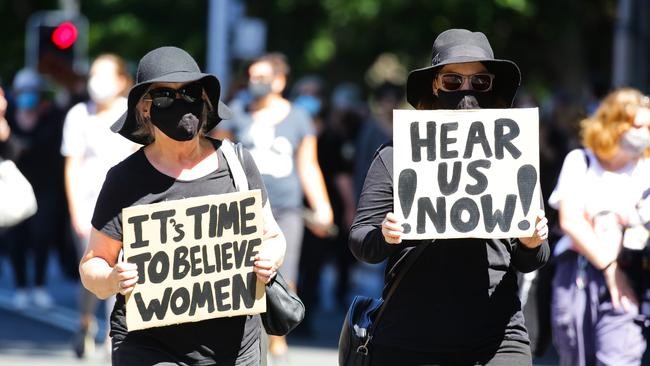
For those committed to preserving a society worth living in, few sights could be more dispiriting than that of mass rallies undermining the presumption of innocence. But last Monday’s demonstrations should have been eminently predictable. After all, the presumption of innocence comes as naturally to human beings as playing the violin does to baboons.
Arthur Schopenhauer, the 19th-century German philosopher, may not have been the cheeriest of companions, but he had a point when he said that “there lies in every human breast a fund of hatred, anger, envy, rancour, and malice, accumulated like the venom in a serpent’s tooth, and waiting only for an opportunity to vent itself”.
And never does the venom vent more freely than when those we dislike stand accused of heinous misdeeds, confirming our prejudices and allowing hostility to morph into that most pleasurable of sensations, outrage.
That is why the great moralists have tirelessly, but unsuccessfully, warned against the rush to judgment, as in Saint Matthew’s admonition, “judge not, lest ye be judged”. And it is also why the presumption of innocence, despite its deep ethical foundations, proved so slow to establish itself as a binding principle and so fragile even once it was in place. It is, for example, clear that Roman law, which the medieval canonists drew on in framing the Western legal system, put the burden of proof squarely on the accuser, with the dictum “Actore non probante, reus absolvitor” — when the plaintiff does not prove his case, the defendant is absolved — enjoying near-constitutional status.
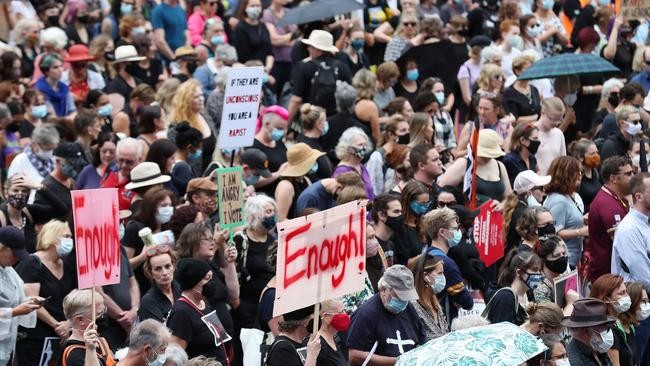
But neither the term “the presumption of innocence” nor the concept played much role in English law, which Australia inherited, until the very end of the 18th century, and it was only in 1791 that the notion appeared in a recorded case at the Old Bailey.
Even then, its applicability was strictly limited, as a “moral panic” about theft led parliament to treble the number of offences in which the burden of demonstrating innocence fell on the defendant.
As late as 1840 — when fear of the “dangerous classes” was reaching new peaks — those cases, which had conviction rates of 80 per cent, could result in defendants being sentenced to hard labour merely for being a “reputed thief” who had been found at “any quay, wharf or warehouse” and could not prove that they did not “intend to commit felony”.
Viscount Sankey’s famous statement in Woolmington v DPP (1935) — the case that enshrined the presumption of innocence — that “throughout the web of the English criminal law one golden thread is always to be seen, that it is the duty of the prosecution to prove the prisoner’s guilt”, was therefore scarcely accurate; and as legal historian Glanville Williams observed, the precept was no sooner stated than it was treated “one might almost say with contempt”, as parliament and the public bayed for summary judgment against those they considered evil.
Far from abating, that clamour has intensified in recent decades, notably as regards sexual offences; yet there are few areas where the safeguards arising from the presumption of innocence deserve to have greater bearing.
It is, in effect, misleading to say, as several speakers did at Monday’s rallies, that wrongful claims of sexual offences are rare.
On the contrary, as study after study shows, because the incidents from which those claims arise can involve many layers of ambiguous communication, making it difficult to ascertain whether or not there was consent, a claimant’s contentions may be objectively incorrect even if they are not intentionally deceitful.
Sky News host Chris Kenny says he thinks everyone can all agree that the aims of the ‘March 4 Justice’ protest are universal, but “partisan party politicking” got in the way.
With the lack of witnesses, the absence of physical evidence and the possible impact of intoxication aggravating the resulting problems, the criminal justice system can readily be induced into grave errors. And when the alleged incidents occurred long ago, the fallibility and malleability of human recall introduce additional dangers.
To make matters worse, further risks have arisen as a “culture of victimhood” has elevated victims, real or imagined, into heroes who receive sympathy, status and a new sense of self-importance from “speaking out”. Championed by crusading issue entrepreneurs, they are transformed into celebrities, regardless of whether their allegations have been properly tested.
That encourages copycat allegations, fuelling the impression that there has been an epidemic of sexual abuse; and even more importantly, it strengthens the complainant’s investment in the claims, leading scholars to note that a complainant’s allegations tend to become less qualified and more extreme once the complainant becomes a “celebrity victim”, as if new-found fame had somehow eliminated the limitations of human memory.
With “victim-oriented” law enforcement turning public officials, such as police and prosecutors, from impartial investigators into advocates for complainants, those poorly founded allegations may then be put to juries who have been unduly influenced by a climate of opinion that precludes a fair trial, in a process starkly exemplified by the tragic injustices that have marred “recovered memory” cases.
Far from reducing those concerns’ relevance, allegations that target or implicate prominent politicians make them all the more pressing. It is in the nature of politics that leading politicians will be distrusted, and sometimes even detested, by many voters who prefer the other side, setting the ground for shows of public hysteria; and it is also in the nature of politics that the allegations will serve political interests — including, at least potentially, the interests of hostile foreign governments seeking to destabilise their adversaries.
Given the threat those risks pose to the rights of alleged offenders, the integrity of the justice system and the quality of our democracy, claims involving prominent politicians deserve to be handled every bit as carefully as any others, particularly by the media, rather than simply being accepted at face value.
None of that is intended to belittle the suffering sexual abuse causes. But instead of redressing injustice, allowing innocent people to be vilified by untrue allegations compounds it. And there is no surer way of enticing specious claims and ensuring wrongful convictions than by replacing the systematic disbelief complainants all too frequently faced in the past with systematic credulity.
Ultimately, the presumption of innocence cannot eradicate society’s defects, erase the blackened walls of history or ensure a world without crime and violence, any more than it can unlock the gates of heaven. But those who demonstrated should remember this: some day, they or their loved ones could be in the dock. And when they are, it is the presumption of innocence, and it alone, that may protect them from the lowest circle of hell.